Scientific education, built on the child
Every parent has heard the name. Here's what the method actually is — and how to tell the real thing.
A physician who watched children before she taught them
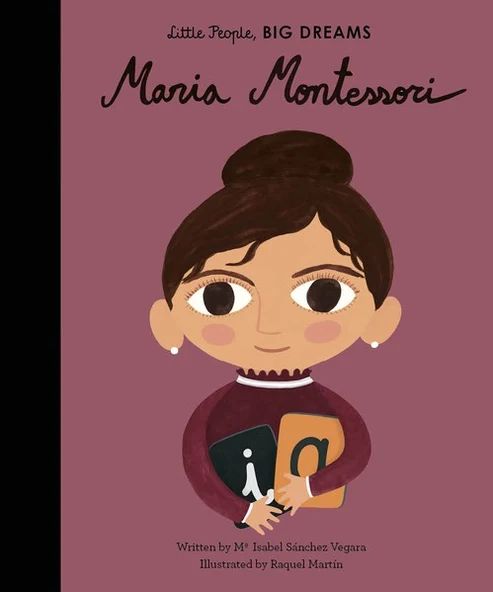
Dr. Maria Montessori was one of Italy's first women physicians. She didn't begin with a philosophy of education — she began with clinical observation, watching how young children actually learn when the environment is prepared for them. What she recorded became a method: children choosing real work, repeating it to mastery, and building concentration, independence, and joy along the way.
More than a century later, her approach is practiced on every continent — and modern research keeps confirming what she saw firsthand: evidence first, philosophy second.
What you'd see in a Montessori environment
Uninterrupted work cycle
No bells, no forced rotations. Children settle into deep, uninterrupted work — the same focused state adults call "flow."
Mixed ages, 3 to 6
Younger children learn by watching; older children master ideas by teaching them. The classroom becomes a small, kind society.
Real materials, not worksheets
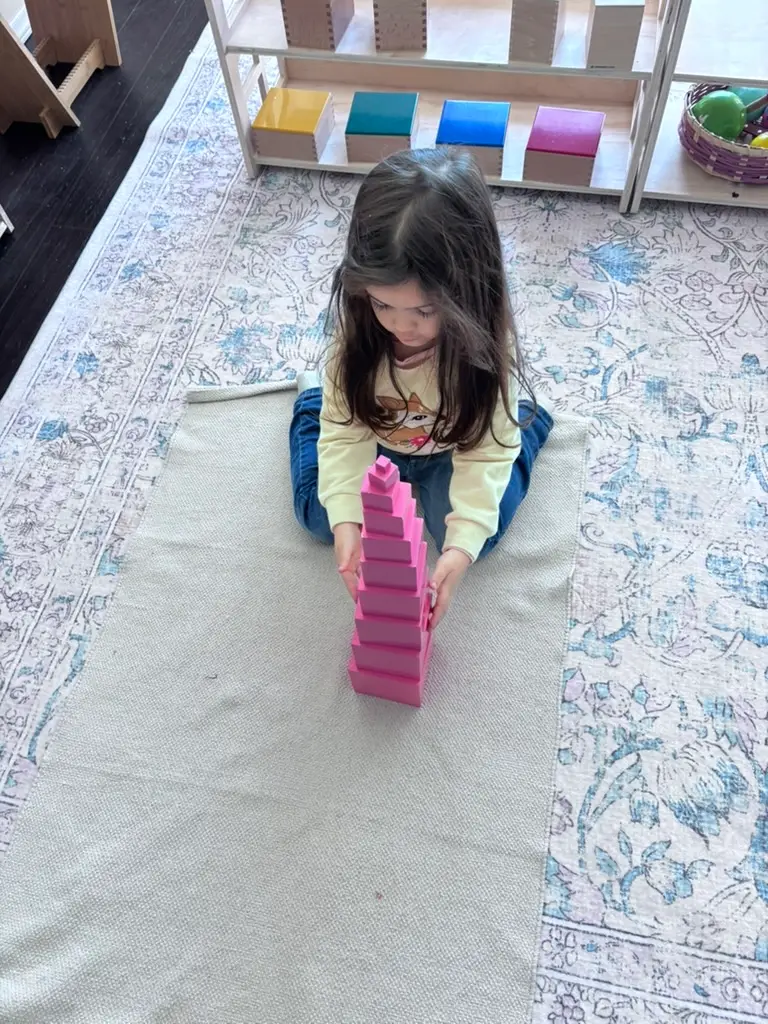
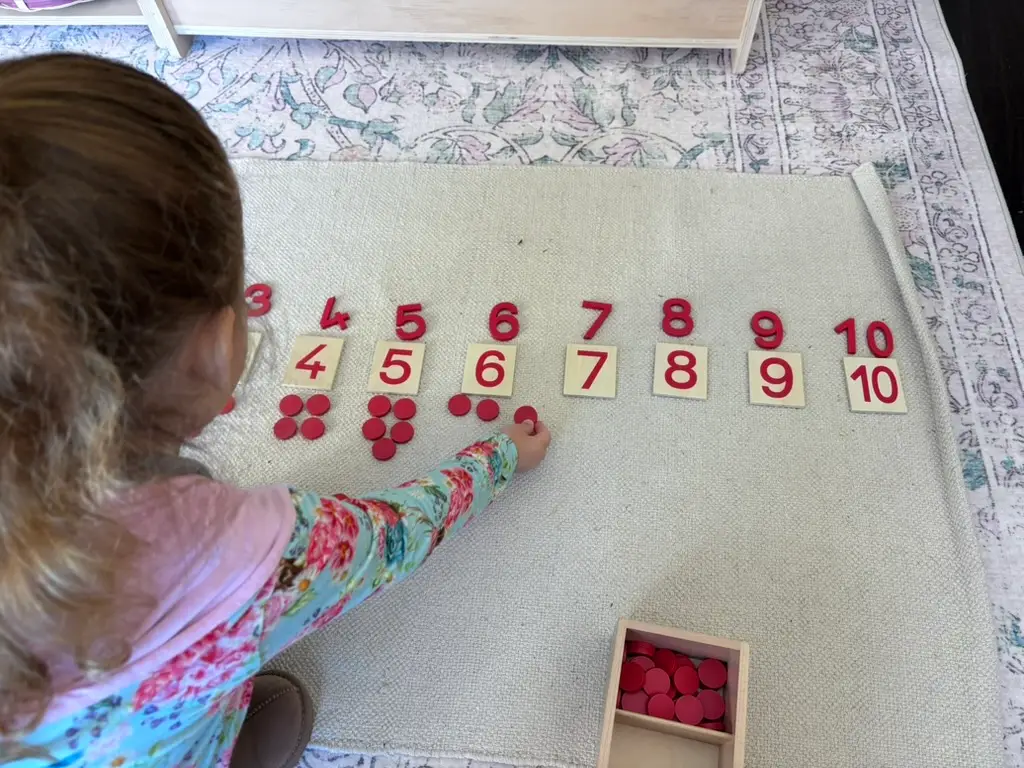
The pink tower, golden beads, sandpaper letters — beautiful objects that let a child hold an abstract idea in their hands.
A guide who observes first
The adult watches, then teaches one-on-one at the exact moment a child is ready — and steps back the moment they're not needed.
"Follow the Child"
The guide teaches when your child is ready — not when the calendar says. Readiness, not age, sets the pace.
The absorbent mind
From 0–6, children soak up their environment effortlessly. These years aren't preparation for learning — they are the learning.
The prepared environment
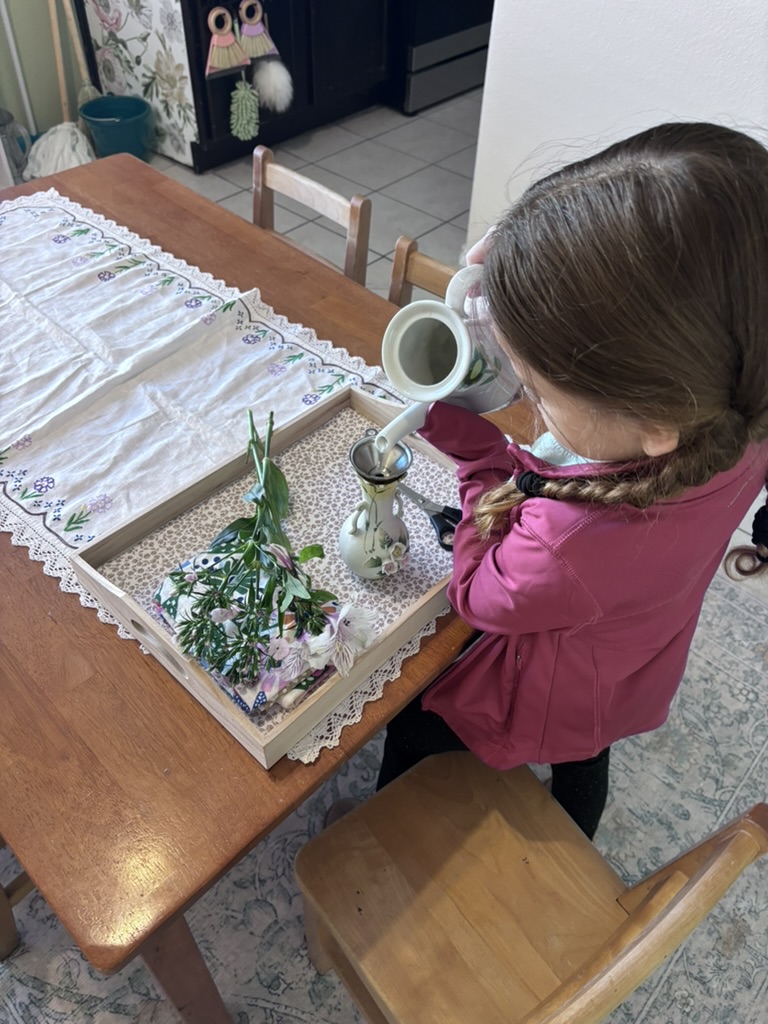
Everything child-sized, orderly, and purposeful — so independence is possible and "help me do it myself" gets a yes.
Freedom within limits
Children choose their work within a structure of grace and courtesy. Not chaos — self-discipline, grown from the inside.
What Montessori does for young children
Decades of studies — including national randomized trials — point the same direction.
A national randomized trial found Montessori preschoolers finished kindergarten ahead in reading, memory, and executive function.
Lillard et al., PNAS, 2025
Montessori preschool lifted every child's outcomes — and narrowed the gaps between children who usually start unequal.
Frontiers in Psychology, 2017
Children who complete a three-year Montessori cycle score higher on both academic and social measures than their peers.
Lillard & Else-Quest, Science, 2006
Not just academics — THE WHOLE CHILD
Essentially, the Montessori approach is not just about teaching academic subjects, but about nurturing the whole child: their intellectual, social, emotional, and spiritual development. Our goal is to empower children to become critical thinkers, serve humanity, and promote peace.
"If salvation and help are to come, it is through the child; for the child is the constructor of man."— Maria Montessori
Is Montessori right for your child?
For most children ages 3–6, the answer is yes — this is the window Montessori was built for, when the absorbent mind makes learning effortless and habits of concentration form for life. Children who crave order, children who crave movement, quiet observers and busy hands alike tend to find their place in a prepared environment.
Two myths worth correcting: Montessori is not unstructured — freedom lives inside clear, consistent limits, and the result is usually calmer than a conventional classroom. And it's not just for gifted children — the research above shows it lifts every child, and narrows gaps rather than widening them.
What it does ask of families is buy-in: consistency between school and home matters. That's not a fit for everyone — and that's okay. If it sounds like your family, the method will feel less like a school choice and more like a way of living with children.
How to tell the real thing
Anyone can put "Montessori" on a sign. On any tour — including ours — look for three things:
1. A trained guide
Ask where the lead guide trained. AMI (Association Montessori Internationale) or AMS training means hundreds of supervised hours — not a weekend course.
2. Real materials
A full set of authentic Montessori materials on low, open shelves — not plastic toys with worksheets in the drawer.
3. The work cycle
Ask how long children work uninterrupted. The real answer is measured in hours, not fifteen-minute stations.
Bring those questions — and more — to any tour you take, including ours.
The best way to understand Montessori
is to stand in a prepared environment for ten minutes.
Come see ours — bring your child, watch the room work, and ask anything (including the ten questions). Only 2 of 10 spots remain.
Request a Tour